
What You'll Find Here
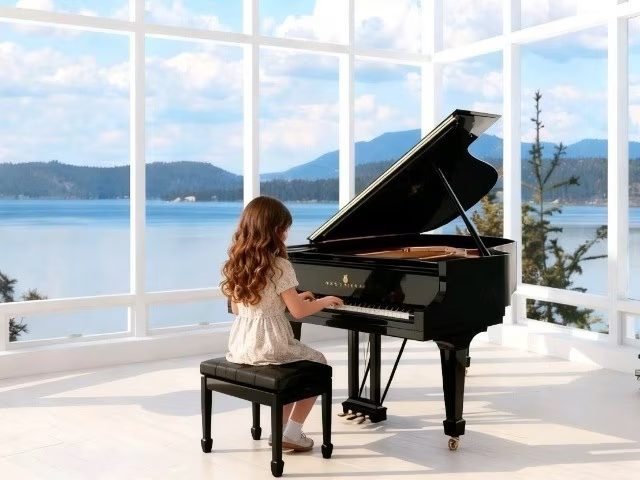
Today, I sat down at the old grand piano from my childhood. As my fingers brushed over the familiar keys, a wave of nostalgia hit me – that familiar mix of joy and sadness from all those years in music school.
It got me thinking about the very different paths music can take us on. I was lucky enough to experience two completely different ways of learning.
- The strict, classical training I had in Asia gave me a solid technical foundation.
- The creative approach I discovered in New Zealand taught me how to express myself and build confidence.
Looking back, I realise I needed both to become a complete musician.
In many Asian families like mine, learning piano is more of a tradition than a hobby.
With my grandmother being a music teacher, my path seemed decided from the start. But if you’ve read about my journey to ABRSM Grade 7, you’ll know that disciplined path eventually made me walk away from music altogether.
When I moved to New Zealand at 11, everything I knew about piano got turned upside down. The contrast between these two cultures completely reshaped my relationship with music.
Now, as a mother, I’ve made a conscious choice: I’m not pushing my children toward any instrument. I want them to discover music at their own pace, in a way that truly speaks to them.
Here’s what I learned from both worlds – and why I believe the best approach might be finding the right balance.
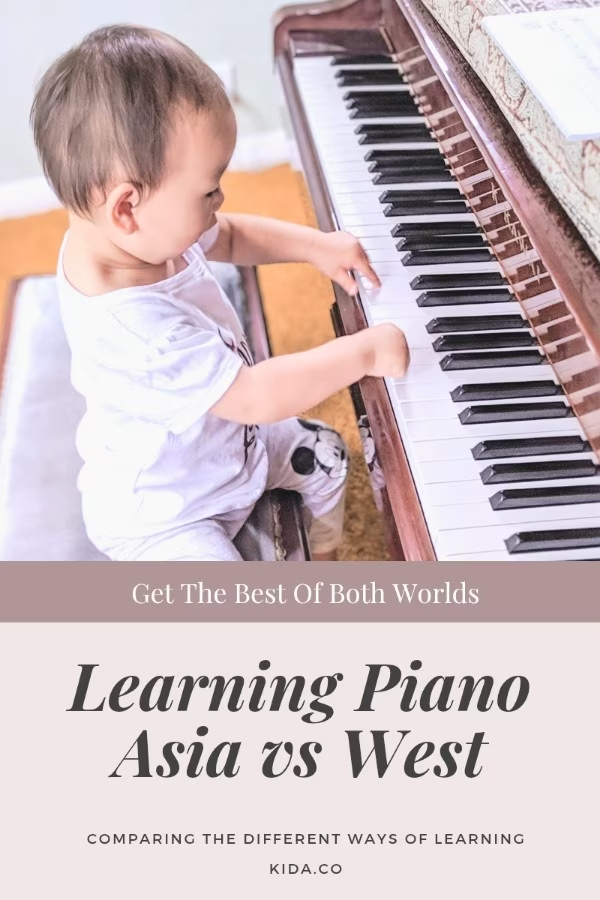
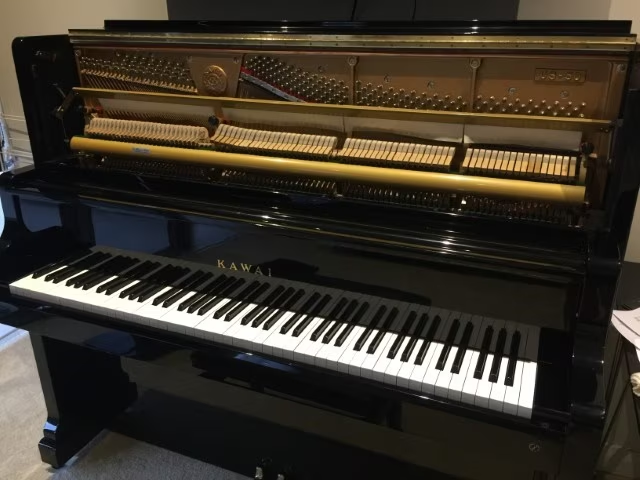
Learning Piano in Asia
When people talk about learning piano in Asia, they’re usually describing a classical training focused on perfect technique and flawless performance.
This approach comes from deep cultural values.
In many Asian countries, education is seen as a way to build character and achieve excellence.
And having a child in the family who plays an instrument well — often the piano or violin — is associated with wealth, class, and social status.
Here, learning piano is a proper, structured journey, often wrapped up in high family expectations in a competitive environment.
Here’s what that often looks like:
- Starting Young: Children often begin lessons very early, sometimes as young as three or four.
- Family Involvement: Parents or grandparents frequently supervise daily practice, ensuring consistency and dedication.
- Exams as Milestones: Progress is rigorously measured through standardized graded examinations, which are a significant focus.
- Performance Pressure: Recitals and competitions are common, often carrying high expectations and a strong sense of duty to succeed.
- The Teacher’s Role: Teachers are highly respected authority figures who focus on building both technique and character.
Learning Piano in the West
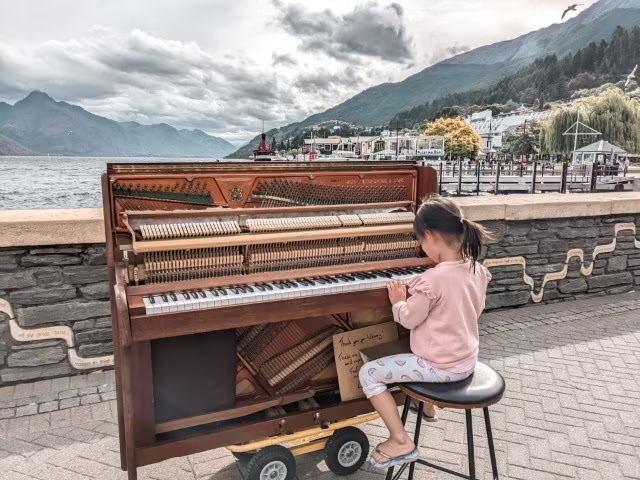
In Western cultures, the approach to learning piano often strikes a different chord, emphasising creativity, individuality, and a personal connection to music.
This approach stems from values that prioritise personal expression and the development of a child’s unique identity.
Here are the common characteristics that surprised me:
- Learning for Expression: Lessons often focus on nurturing the child’s musicality and helping them find their own voice.
- A Flexible Path: While exams are available, the learning journey is typically more fluid, adapting to the child’s interests and pace.
- Creating, Not Just Repeating: Students are often encouraged to improvise, compose, and explore different musical styles.
- A Different Support System: Parents tend to be supportive but less involved in the details of daily practice, fostering independence.
- Performance for Fun: Recitals are often treated as celebratory events and chances to share, rather than as high-stakes assessments.
Last Notes
My journey through these two contrasting approaches taught me that there’s value in each method.
If you’re a parent wondering about music education for your child, here’s what I’ve learned:
Don’t feel you have to choose one approach over the other. The real magic happens when you mix the best of both worlds.
Maybe that means maintaining the Eastern habit of consistent daily practice, but letting your child choose some of the music they practice. It could mean celebrating progress like Western teachers do, while still appreciating the importance of technical skill.
The goal is to avoid the extremes that could potentially lead to resentment towards an instrument, or worse, music as a whole.
Instead, we can help our children build a friendship with music that lasts a lifetime – one that has both discipline and joy, technique and creativity.
After all, music isn’t about perfect performance or complete freedom – it’s about finding your own voice.
And sometimes, that voice needs both structure and space to truly sing.
Share the Love!
As always, we aim to provide valuable content to help other families like yours live life to the fullest.
Remember to like, pin and share it with those who matter to you!
If you resonate with us, subscribe to stay in touch and we hope to see you in another chapter.
∞ Kida