
What You'll Find Here
How It All Began
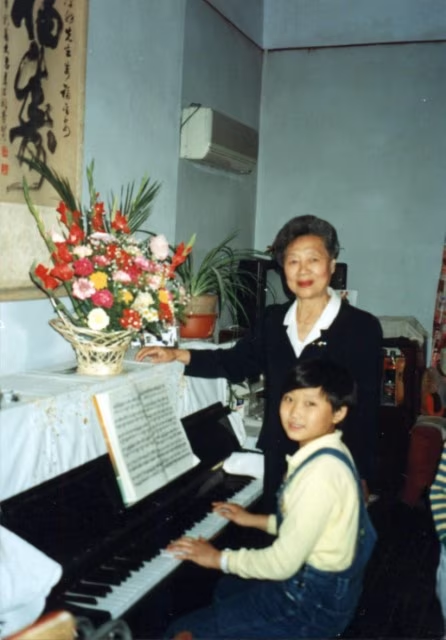
My life with the piano began when I was 4, with my grandmother as my first teacher. She used to teach singing at a university back in the day, so music naturally ran in the family.
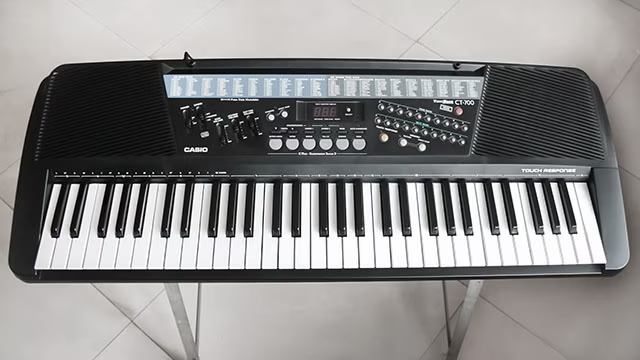
I have this hazy memory of starting on a electronic keyboard — a fancy toy for a child. The keys were soft and gentle to my tiny hands, and I loved pressing random buttons, dancing to the beats.
It didn’t take long for my grandmother to decide that I’d learned all she could teach me, and so, she passed me on to a colleague of hers from the same university.
In my first month of learning with my new piano teacher, she gave me an advice (or more like a notice): if I ever wanted to get anywhere with piano, or even think about taking an ABRSM exam, I needed to upgrade from my toy keyboard to a proper upright piano before my fingers got lazy on the light-touch keyboard.
It was either: take it seriously now, or forget about being a professional pianist.
And of course, we took it seriously.
When Piano Stopped Being Fun
Without the childhood videos, my first real memory of a proper piano piece was learning Beethoven’s ‘Für Elise’ at 7.
I still remember staring at the sheet music — it was covered in what looked like tiny ants crawling all over the page, and there were so many of them! To my 7-year-old self, it felt like an impossible mountain to climb.
It was my grandmother who encouraged me to at least give it a go. She sat with me through the practices every day, patiently cheering me on.
Through it all, she taught me a valuable lesson that I’ve carried for life:
No matter how hard a piece seems, just focus on getting one bar right at a time. And you’ll conquer the whole piece before you know it.
Looking back, the greatest lesson I took from learning an instrument was patience and persistence beyond ordinary limits. Those same qualities became key to my success and financial freedom later in life.
Back to our story, as you can imagine, the day that I finally played Für Elise was one of my proudest days.
The very next day at school, I showed off my piano skills in front of the whole class. It was my first-ever performance in front of an audience…
and it was a complete disaster.
I was terrified. I stumbled, made mistakes, and didn’t even finish the piece. That day was traumatising, to say the least.
I remember Dad trying to keep a smile, but I could tell he felt deeply ashamed. I felt so guilty for letting my family down that I decided I would never play the piano again.
From that moment on, I developed a resentment towards being under the spotlight, a feeling that has lingered with me ever since.
The Grind to ABRSM
A year later, my piano teacher sat my parents down and asked if we ever had the intention of going for ABRSM exams. Of course, my parents said yes without hesitation.
In China, having a certificate like that would give me extra points on my middle school applications, which in our competitive system could make all the difference.
And just like that, the goal was set: I had to pass Grade 7 before I left primary school.
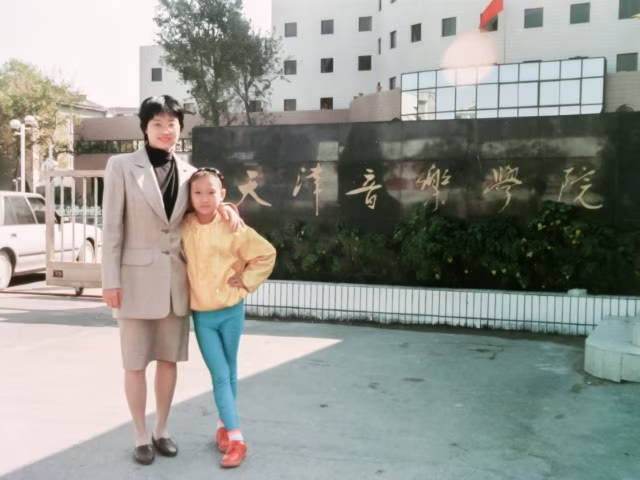
To make it happen, I began taking private lessons with a well-known piano teacher from the Conservatory of Music in Tianjin, China.
Let’s just say she was… formidable. Very harsh and extremely strict.
My piano tuition fees went up dramatically, and so did the expectations from my parents.
Suddenly, playing the piano was all about the exam syllabus — scales, sight-reading, and specific pieces I had to play flawlessly, or robotically as I remember it.
Every day after school, my practice sessions got longer and a lot more boring.
I’d sit there, watching the minutes tick by on the clock, drilling the same passages again and again. I’d twiddle my thumbs during my short breaks, listening to the conversation and laughter floating in from outside.
I was physically sitting in front of the piano, but my mind was long gone.
The Rigorous Road to Grade 7
The pressure was immense. My weekly piano lessons with this new teacher were something I genuinely dreaded.
She seldom smiled, and as far back as I can remember, there was never a single word of praise. It was always about another wrong note, an incorrect expression, or a performance she called ‘rigid’.
My hands were small and could only reach 7 keys at the time. Practising staccato octaves (8 keys) was painful; the stretch and strength required meant my muscles never had enough time to heal, so they were always in pain.
But the physical pain was nothing compared to the growing weight of resentment.
My teacher constantly compared me to other students, especially one girl who was always held up as the golden example. “Look at her,” my teacher would say, “she’s a natural, very good, just perfect. Learn from her!”
Those memories stayed with me, especially of the girl who was better than me in every way. The comparisons left a mark on my self-esteem. At that point, learning the piano felt like a burden I was forced to carry.
Through all that, I passed my ABRSM Grade 7 exam when I was 11. But the accomplishment didn’t bring joy or pride. The only thing I felt was a deep, overwhelming sense of relief.
It was finally over.
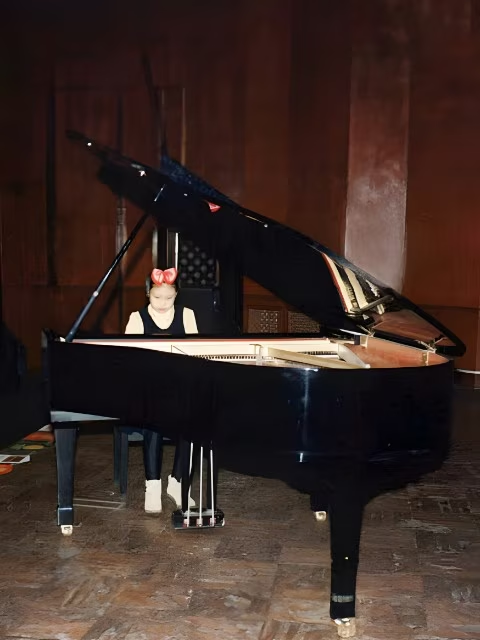
Below is a video of one of my first on-stage performances — an end-of-year recital before my ABRSM exam.
You can probably see the nerves. I wasn’t playing for the music; I was just terrified of making a mistake, just counting down the seconds until I could escape.
Leaving It All Behind, For Now.
Not long after that piano performance, my mum and I moved to New Zealand. I didn’t just take a break from the piano; I actively walked away from it, and didn’t touch a piano again until I was 16.
It’s funny — although I had grown to truly dislike the piano, I realised I still had a secret love for music itself.
I used to work out my favourite cartoon tunes by ear and play them for my cousins. I could not only play them on the piano but also write them down on paper — something I loved doing even back then.
Unfortunately, nobody noticed this little talent of mine. But the hidden spark ended up leading me down a completely different — and much more fitting — path later on in New Zealand.
We’ll get to that part of the story next.
Last Notes
So, that was the end of my first piano life in China.
If you had asked me then, I would have told you my journey with music was well and truly over. I’d passed the exam, met the goal, and closed the lid on the piano for what I thought was the last time.
I didn’t realise that all that time, a tiny, quieter part of me was keeping a different kind of music alive. It had just been waiting for a different kind of space to grow.
Moving to New Zealand gave me that space. It was a clean slate, though I didn’t know it yet.
But that’s the funny thing about a true passion, I suppose. Even when you think it’s gone, it has a way of finding you again when you least expect it.
My story with music wasn’t over. In many ways, the best part was just about to begin.
Thank you for reading. In Part 2, I’ll share how a new country and a completely different approach helped me rediscover the joy I thought I’d lost for good.

If this post has helped you, a cup of coffee is all it takes to make my day. Thanks a latte!
Share the Love!
As always, we aim to provide valuable content to help other families like yours live life to the fullest.
Remember to like, pin and share it with those who matter to you!
If you resonate with us, subscribe to stay in touch and we hope to see you in another chapter.
∞ Kida