
What You'll Find Here
This post may contain affiliate links. (full disclosure)
Welcome to Apia, Samoa’s charming capital, where you step off the plane into a world where time slows down and the friendliest people greet you with a big Samoan smile.
Apia being the heart of Samoa, is a dreamy destination packed with culture experiences, lush green landscapes and incredible natural beauty.
But before you pack your bags, knowing a few essentials can make your trip seamless and unforgettable.
This guide will walk you through everything – cultural tips, getting around, things to do and where to stay, so you can experience Apia like a pro.
Why we chose Apia, Samoa as our tropical getaway destination
Our family has always been drawn to destinations that offer unique and authentic experiences that aren’t packed with tourists.
This time, my husband had just set up his business in New Zealand. To give him the time and peace he needed to focus, I decided to take our 8-month-old baby to the Pacific paradise of Apia, Samoa for a week.
Initially, I hesitated with the idea of travelling to Samoa with a baby, especially amidst the news about Zika at the time.
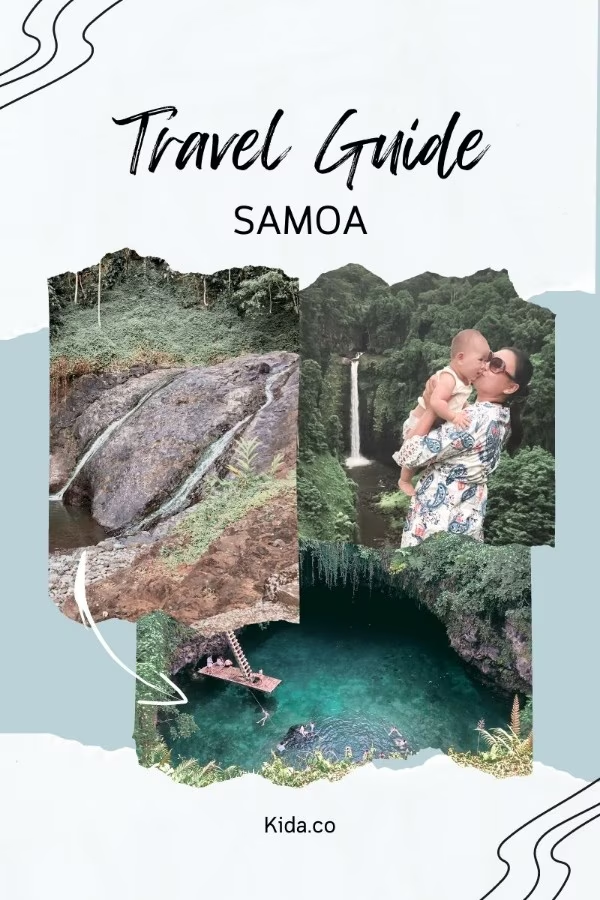
But when I came across the mesmerising photos of the To-Sua Ocean Trench, I was convinced.
Despite the doubts about an exotic, and rather, underdeveloped destination, I decided to ‘just go for it’ and push myself out of my comfort zone.
With our compact travel stroller, a few pieces of summer beachwear, a suitcase half-filled with nappies, a couple of DEET-free insect repellents, and my life-saving Ergo baby carrier, we set off to explore the Pacific Paradise.
Samoa: The Hidden Gem in the Pacific
Apia, Samoa, is a place where you can explore colourful markets, dive into crystal-clear lagoons, and learn about the rich traditions of Samoa.
Whether you’re craving fresh seafood, cultural experiences, or just some downtime by the water, Apia has it all.
There are two main islands that most travellers visit:
- Upolu is home to the capital Apia and has most of the population. It is also where the To-Sua Ocean Trench is located.
- Savai’i is larger but less populated, it’s wilder and more rugged, and known for its unique volcanic landscapes.
When is the best time to visit Samoa?
The best time to visit Samoa depends on what you’re looking for in your trip.
Dry Season (May to October)
This is the most popular time to visit Samoa, with sunny days, cooler evenings, and low humidity.
With minimal rain, it’s ideal for beach activities, hiking, and exploring the islands.
This period also coincides with local festivals like the Teuila Festival in September, showcasing Samoan culture with performances, food, and traditional games.
Wet Season (November to April)
The wet season brings higher humidity and frequent rainfall, but don’t let that put you off.
Rain showers are usually short-lived, leaving plenty of time for activities.
The landscapes are lush and vibrant during this time, and it’s less crowded, meaning better deals on accommodations and tours.
Just keep in mind that this is cyclone season, so monitor weather forecasts if you plan to visit.
Shoulder Seasons
Late April and early November are great if you’re after fewer crowds and moderate weather.
You’ll still enjoy decent conditions without peak season prices.
If you prefer the driest weather and lively events, aim for the dry season.
For quieter, budget-friendly travel, the wet season can still be an amazing experience.
What to Pack for Samoa?
Sunscreen
If you plan to be in the ocean, be sure to buy a reef-safe sunscreen for snorkelling and water activities.
Insect repellent
You’ll be spending a lot of time outdoors, so insect repellents are essential to keep the mosquitoes away.
Consider using a deet-free insect repellent for kids.
Light clothing
Given Samoa’s tropical climate, lightweight, breathable clothing is recommended. Pack a mix of swimwear, shorts, t-shirts, and a light jacket or sweater for cooler evenings.
Hat and sunglasses
Protect yourself from the strong sun with a wide-brimmed hat and UV-protective sunglasses.
Reusable water bottle
An insulated water bottle (for iced water) would come in handy on the hot days.
Snorkelling gear
If you plan on exploring Samoa’s vibrant marine life, consider bringing your own snorkelling gear for comfort and hygiene.
Travel adapter
Samoa uses Type I power sockets, so if your devices use different plug types, you’ll need a travel adapter.
Comfortable walking shoes
Choose shoes with good traction as you’ll likely be exploring various terrains.
I’m a big fan of shoes from Hush Puppies.
Swimsuit and towel
Samoa’s beautiful beaches and swimming spots are not to be missed.
Cash
While credit cards are accepted in many places, having cash on hand is always a good idea.
Leave extra space for souvenirs
Samoa offers a range of unique crafts and souvenirs, so leave some room in your luggage if you’re interested in bringing back some gifts.
The Ultimate Family Packing List
Crafted by a mother of 2 with a focus on minimalist travels, this family packing list is all you need for a stress-free packing experience.

Currency Exchange Tips for Samoa
The official currency in Samoa is the Tala (WST).
The exchange rate is approximately 1 WST = 0.6 NZD.
So, if you’re travelling from New Zealand or Australia, you can roughly calculate costs by halving the amount in Tala.
Order Online
If you prefer to have everything organised before your trip, consider ordering your currency online from your local bank.
Exchange in Samoa
If you haven’t had a chance to order Tala before your trip, you can exchange your money in Apia.
While there is a currency exchange booth at Faleolo Airport, you’ll generally get a better rate in Apia town centre.
Remember to bring a photo ID for the transaction.
Credit Cards
Most hotels and restaurants in Samoa accept credit cards, usually with a surcharge of around 3-3.5%.
Usually, our family would recommend the Wise Travel Card for managing multiple currencies, but Tala, the local currency of Samoa, is not currently supported on Wise.
So the next best option would be to bring cash for most transactions and a debit/credit card for hotels and restaurants.
The Unique Fale Culture of Samoa
One of the things we love about travelling is the opportunity to engage with locals and learn about their way of life.
Taxi drivers are often a wealth of local knowledge and insights, and the best part is you’ll get the opportunity to have a chat on the way to your destination.
During our trip to Apia, we had some fascinating conversations with our taxi driver that gave us a deeper understanding of Samoan culture.
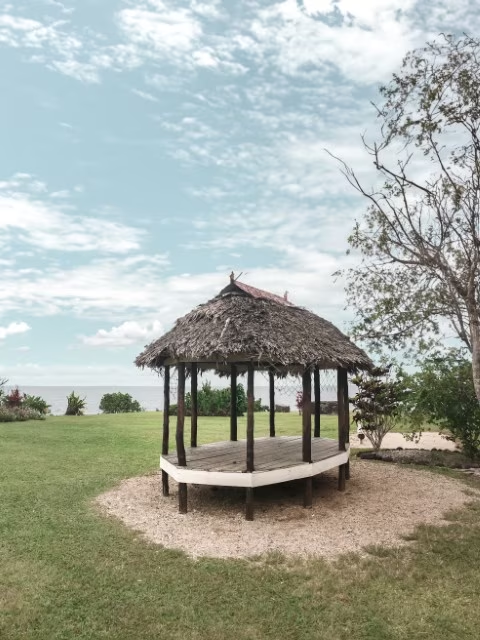
As we drove from the airport to our resort in the early evening, the flickering lights from the local houses, or ‘fales’, caught our interest.
Unlike the enclosed houses we’re used to, these fales had no doors or windows, just a foundation, a roof, and poles.
We could see people going about their evenings at home, completely out in the open with no privacy whatsoever!
According to our friendly taxi driver, each village in Samoa has its own chief, and the community is closely knit, with almost everyone knowing each other.
It’s common for large groups of friends and families to gather at night and play bingo together.
Neighbours are often invited to join family feasts, and because of this strong sense of community that extends to the entire island, crime is practically non-existent here, making Samoa one of the safest destinations for families.
Our taxi driver also shared that on Sundays, most people attend church in the morning and spend the rest of the day with their families.
This means many shops and attractions are closed on Sundays, so it’s important to plan your itinerary accordingly.
These insights from our taxi driver enriched our understanding of Samoan culture and lifestyle. It’s these kinds of interactions that make travelling so rewarding. They open our eyes to different ways of living, encourage us to appreciate diversity, and broaden our perspectives.
So, next time you’re travelling, don’t forget to strike up a conversation with your taxi driver. You never know what fascinating insights you might gain!
Cultural Etiquette in Samoa
When travelling in Samoa, it’s important to respect local customs and be mindful of safety.
Respect for local customs
Dress modestly when visiting villages and always remove your shoes before entering someone’s home.
This shows respect for Samoan traditions and culture.
Sunday observance
Sundays are a day of rest in Samoa, with many locals attending church and spending time with family.
Be respectful of this tradition, and plan your activities accordingly.
Ask before photographing
If you want to take photos of locals, especially in villages, it’s polite to ask for permission first.
Road safety
If you’re driving, remember that Samoans drive on the left side of the road.
Always wear your seatbelt and follow local speed limits.
Health precautions
Must bring insect repellents and consider bringing a basic first-aid kit for minor injuries or illnesses.
Respect wildlife and nature
When exploring natural sites, follow the principle of ‘leaving no trace’.
Don’t disturb wildlife, and take any litter with you.
Tidal awareness
Be aware of the tides, especially when exploring coastal areas.
Rocks can be slippery when wet, so exercise caution.
Getting Around in Samoa
Navigating Apia and the surrounding areas can be an adventure in itself.
Given that we were travelling with a baby and a couple of friends, we explored a few different modes of transportation during our stay.
Here’s a rundown of our experiences:
By Taxi
The journey from Faleolo International Airport to Apia town centre takes about 40 minutes by car and costs around 60-80 Tala.
Baby Seat: If you’re travelling with a baby, you’ll be relieved to know that taxi drivers in Samoa are not overly concerned about having a baby car seat. So, you can leave your baby car seat at home.
Hire a Local Driver
Hiring a local driver can be a great way to explore the island.
We arranged for a local to be our guide/driver for three days at a cost of about 360 Tala per day.
This arrangement not only provided us with transportation but also gave us the benefit of local knowledge and insights.
Hire A Car
The cost of hiring a car in Apia Samoa is around 120 Tala per day, plus 21 Tala to convert your license.
There may be additional charges for pick-ups or drop-offs outside of Apia town centre.
Driving in Samoa is relatively straightforward; you drive on the left side of the road, and the Main Coast Road will take you around the island in less than half a day.
Remember to fill up on petrol in town as petrol stations are scarce elsewhere on the island.
To help with navigation, download the Google area map offline. (Zoom out to the region and type ‘okmaps’ in the search bar to download the area map. You’re welcome!)
On Foot
Exploring Apia town on foot is very doable. Just remember to avoid the hottest part of the day, around mid-morning to midday.
Don’t forget to wear a sunhat and apply sunscreen for protection against the strong sun.
Ready to Start Planning?
Share the Love!
As always, we aim to provide valuable content to help other families like yours live life to the fullest.
Remember to like, pin and share it with those who matter to you!
If you resonate with us, subscribe to stay in touch and we hope to see you in another chapter.
∞ Kida